
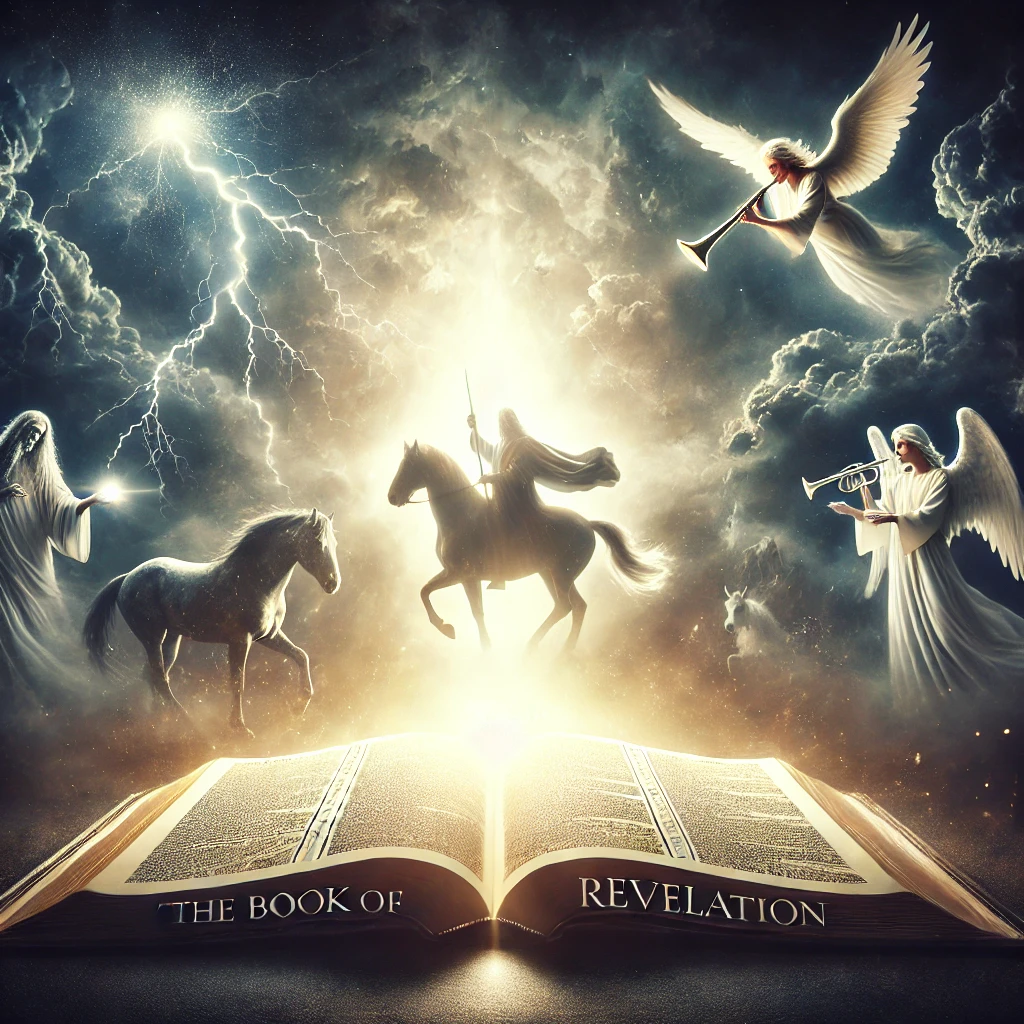
My Journey Into Understanding God’s Plan
I grew up hearing about the end times—about the rapture, the mark of the beast, and the need to endure tribulation if left behind. The message was simple: live without sin and make sure you don’t take the mark. But beyond these surface-level warnings, I never truly understood the depths of Revelation. I never questioned it—I just accepted it.
That was until one day, I heard a sermon that shook me. The preacher spoke in detail about the events to come, and suddenly, I was left with more questions than answers. I wanted to understand. I wanted clarity. But fear held me back. How could I, as a Christian, not already know this?
So I remained silent, letting these questions stir in my heart for years. They would surface in my quiet moments—What really happens when we die? What if I’m left behind? Can I lose my salvation?—but I had no answers, only uncertainty.
Then, something changed. Recently, I began hearing about so many people passing away. Death felt closer than ever before. My questions became louder, more persistent. And in the midst of my search, the Holy Spirit led me to a video—a detailed explanation of Revelation that finally pieced together what had always felt fragmented in my mind.
The Questions That Weigh on Many Hearts
As I watched and studied, I realized that I wasn’t alone. Many believers, even those strong in faith, wrestle with these same questions:
- What happens when we die? Do we immediately face judgment? Do we go straight to heaven or hell, or is there something in between?
- What if I’m left behind after the rapture? Why would God allow that? Is there any hope after that point?
- Can I lose my salvation? If I have placed my faith in Jesus, is there still a risk that I could fall away and be condemned?
The weight of these questions is real, and for many, the answers feel unclear. But I found that Scripture provides a solid foundation for these concerns, and the Book of Revelation, though complex, is not meant to confuse—it is meant to reveal.
What I Discovered Through the Video
The video I watched didn’t just give me answers—it gave me understanding. It painted a clear picture of God’s holiness, justice, and love. It showed me that Revelation is not just about wrath and judgment; it is about redemption, victory, and the fulfillment of God’s promise to His people.
For years, I saw God as someone I had to be “good enough” for, but Revelation opened my eyes to who He truly is—a holy, just, yet merciful God who desires for none to perish but for all to come to repentance (2 Peter 3:9). It is His grace that saves us, not our works.
This journey has deepened my love for Christ and my awe of His plan. The more I read, the more I see how great His love is and how serious our eternity is. I now read Revelation not with fear, but with hope—because for those who are in Christ, this is not the end. This is the beginning of our eternity with Him.
An Invitation to You
If you’ve ever struggled with these same questions, if you’ve felt fear, doubt, or confusion about the end times—I encourage you to seek Him. Don’t ignore the stirring in your heart.
“You will seek Me and find Me when you search for Me with all your heart.” (Jeremiah 29:13)
God is not hiding the truth from us. He reveals it in His Word, and when we ask Him for wisdom, He gives it freely (James 1:5).
I pray that as you begin to read the Book of Revelation, it will not bring fear, but revelation—a deeper understanding of who God is, how just He is, and how unfathomably loving He is.
I have included the video that helped me in my study. It may help you too. I encourage you to watch it with an open heart and allow the Holy Spirit to speak to you.
The Book of REVELATION | FULL MOVIE 🎬 Narrated by John
Answers to the questions I wrestled with
1. What happens when we die?
For believers in Christ, Scripture tells us that to be absent from the body is to be present with the Lord (2 Corinthians 5:8). When we die, our souls go immediately to be with Jesus if we are saved. However, for those who reject Christ, there is a place of torment, awaiting final judgment (Luke 16:22-23, Revelation 20:11-15).
2. What happens if I am left behind after the rapture?
The rapture is God’s promise to take His church (1 Thessalonians 4:16-17), but those left behind will endure the Great Tribulation—a time of severe judgment and deception. Yet, even then, God’s mercy remains. People can still come to Christ, but at great cost (Revelation 7:14). The time to seek Him is now, while salvation is freely available (2 Corinthians 6:2).
3. Can I lose my salvation?
Salvation is by grace alone, through faith alone (Ephesians 2:8-9). True believers may struggle, but God keeps them secure (Philippians 1:6)
- But why does Scripture teach that both the righteous and unrighteous will face final judgment after Satan’s defeat and banishment to hell? How do we reconcile this with the scripture that says “to be absent from the body is to be present with the Lord”?
Immediate Judgment After Death (For Individuals)
When a believer dies, their soul goes immediately to be with the Lord. Paul affirms this in 2 Corinthians 5:8:
“To be absent from the body is to be present with the Lord.”
Similarly, Jesus told the thief on the cross:
“Truly I tell you, today you will be with me in paradise.” (Luke 23:43)
This means that those who are saved in Christ go directly into His presence upon death. However, this is not the final judgment—it is an immediate placement of the soul in either heaven or hell while awaiting the resurrection of the body.
2. The Great White Throne Judgment (For All, At the End of Time)
Revelation 20:11-15 describes the final judgment, where all—both the righteous and the unrighteous—will stand before God. This happens after the 1,000-year reign of Christ and the final defeat of Satan.
“Then I saw a great white throne and Him who was seated on it. The earth and the heavens fled from His presence, and there was no place for them. And I saw the dead, great and small, standing before the throne, and books were opened… The dead were judged according to what they had done as recorded in the books.” (Revelation 20:11-12)
At this point, the souls that were already in God’s presence (believers) and those who were in torment (unbelievers) will be resurrected in their bodies and formally judged. Those who are in Christ will receive eternal life in the New Heaven and New Earth (Revelation 21:1-4), while those who rejected Christ will face eternal separation from God in the Lake of Fire (Revelation 20:15).
How Do These Two Judgments Fit Together?
- After Death:
- Believers go to be with the Lord (Luke 23:43, 2 Corinthians 5:8).
- Unbelievers go to a place of torment (Luke 16:22-23).
- At the Final Judgment:
- All souls are resurrected and given new bodies (John 5:28-29).
- Believers are judged for their rewards in heaven (2 Corinthians 5:10).
- Unbelievers are judged for eternal punishment (Revelation 20:15).
Why Does God Have a Final Judgment?
Even though believers are already saved, the final judgment is where God publicly declares His justice and righteousness before all creation. This is when Christ’s victory over sin and death is fully revealed.
So, in summary:
- To be absent from the body is to be present with the Lord—our souls go to Him immediately when we die.
- The final judgment happens after the defeat of Satan—this is when all are resurrected and receive their eternal destiny.
This truth should give us hope, because if we are in Christ, we can have confidence in our salvation (Romans 8:1). But it should also give us urgency, knowing that many are still lost and will face judgment without Christ.
This is the message God has placed on my heart to share. If you have questions, don’t be afraid to ask. Seek Him earnestly, and He will make Himself known to you.
“The testimony of Jesus is the spirit of prophecy.” (Revelation 19:10)
I pray this journey through Revelation changes your life as it has mine.
My Study Notes
The book of Revelation is one of the most complex and symbolic books of the Bible, written by the Apostle John while he was exiled on the island of Patmos. It is a prophetic book that reveals God’s ultimate plan for history, the triumph of Christ, and the final judgment of the world.
I. Background of Revelation
Author: The Apostle John
Date: Around A.D. 95, during the persecution under Emperor Domitian.
Audience: The seven churches of Asia Minor (modern-day Turkey) and all believers throughout history.
II. Theme in Revelation
Purpose: To reveal Jesus Christ as the Sovereign Lord over history, encourage persecuted Christians, and give hope in the midst of suffering.
1. Jesus Christ as the Glorious King (Revelation 1:1-20)
John sees a vision of Jesus Christ in His glorified form, standing among seven lampstands (which represent the churches). Christ is described as:
The Alpha and Omega (1:8) – meaning He is eternal.
The First and the Last (1:17) – He is supreme over all history.
The One with Eyes Like Fire and a Sword in His Mouth (1:14-16) – He will bring judgment.
Evangelical significance:
Jesus is not just a suffering servant; He is the Risen King and Judge of the world.
This book is about His sovereignty, victory, and return to establish His Kingdom.
2. Messages to the Seven Churches (Revelation 2-3)
Jesus addresses seven churches with messages of commendation, rebuke, and encouragement. Each church represents different types of Christians and churches throughout history:
Ephesus (Lost Love) – Sound doctrine but lacking love.
Smyrna (Persecuted Church) – Faithful in suffering.
Pergamum (Compromised Church) – Tolerating false teachings.
Thyatira (Corrupt Church) – Immorality and false prophecy.
Sardis (Dead Church) – Spiritually lifeless.
Philadelphia (Faithful Church) – Little strength but kept the faith.
Laodicea (Lukewarm Church) – Neither hot nor cold, spiritually indifferent.
Significance:
Christ is watching over His Church and calling believers to repentance and faithfulness.
The letters are a warning against compromise and a call to perseverance in the faith.
3. The Throne of God and the Worship of the Lamb (Revelation 4-5)
John sees a vision of God’s throne in heaven, surrounded by 24 elders and four living creatures worshiping Him.
A scroll is in God’s hand (symbolizing God’s plan for history), but no one can open it except the Lamb of God—Jesus Christ.
The Lamb (Jesus) is worthy to open the scroll because He was slain and redeemed people from every nation (5:9-10).
Significance:
Jesus is both Savior and Judge—only through Him can God’s redemptive plan unfold.
The ultimate purpose of creation is to worship God and the Lamb.
4. The Great Tribulation and God’s Judgments (Revelation 6 -19)
This section describes the seven seals, seven trumpets, and seven bowls, which unleash God’s judgment on the earth.
The Four Horsemen of the Apocalypse (Rev. 6:1-8) – Represent conquest, war, famine, and death.
The Great Tribulation (Rev. 7-16) – A time of suffering, persecution, and divine wrath.
The Rise of the Antichrist (Rev. 13) – A global leader empowered by Satan who deceives the world.
The Mark of the Beast (Rev. 13:16-18) – A mark that identifies those who follow the Antichrist, while believers refuse it.
The Fall of Babylon (Rev. 17-18) – The destruction of the world system opposed to God.
Significance:
The wrath of God will come upon those who reject Christ.
Believers are called to remain faithful during persecution.
The Antichrist is a real figure who will deceive many, but his reign is temporary.
5. The Second Coming of Christ (Revelation 19)
Jesus returns on a white horse, wearing a robe dipped in blood, and leading the armies of heaven.
He defeats the Antichrist and false prophet and casts them into the lake of fire.
The nations are judged, and Christ establishes His rule.
Significance:
Christ’s return is the blessed hope of all believers (Titus 2:13).
He will defeat evil and reign forever.
6. The Millennial Reign and Final Judgment (Revelation 20)
Satan is bound for 1,000 years, and Christ reigns with His saints.
After the Millennium, Satan is released for a short time but is ultimately defeated.
The Great White Throne Judgment – Unbelievers are judged and thrown into the lake of fire.
Significance:
Believers will reign with Christ, while those who reject Him face eternal separation from God.
God’s justice is perfect—He will not let sin go unpunished.
7. The New Heaven and New Earth (Revelation 21-22)
God creates a new heaven and new earth where righteousness dwells.
The New Jerusalem descends, where God will dwell with His people forever.
There will be no more death, sorrow, or pain—only eternal joy in God’s presence.
Jesus gives a final invitation: “Come!” (Rev. 22:17), calling all to receive the gift of eternal life.
Significance:
This is the ultimate fulfillment of God’s redemptive plan.
Eternal life is only for those who trust in Christ.
Believers are called to spread the Gospel, as Christ’s return is near (Rev. 22:12).
III. Key Teachings from Revelation
- Jesus is Lord of History – Everything happens under His authority.
- Persecution is Temporary, but Christ’s Kingdom is Eternal – Believers must remain faithful.
- God’s Judgment is Just and Sure – Evil will not prevail forever.
- Salvation is by Grace through Faith in Jesus Alone – Only those who trust in Christ will enter the New Heaven and Earth.
- Jesus is Coming Soon – We must live in readiness and spread the Gospel.
Conclusion: Revelation is a Book of Hope
Though Revelation contains terrifying judgments, its ultimate message is hope and victory in Jesus Christ. For those who belong to Him, it is a promise of eternal joy and peace. For those who reject Him, it is a warning of judgment.
The final words of the Bible remind us: “Come, Lord Jesus!” (Revelation 22:20).
Disclaimer I am not a theologian or biblical expert. The notes on this page reflect my personal insights gained through prayer and reading the Bible. They are intended to supplement, not replace, your own Bible study. Please read the Scriptures yourself and seek guidance from the Holy Spirit and your spiritual leader.