
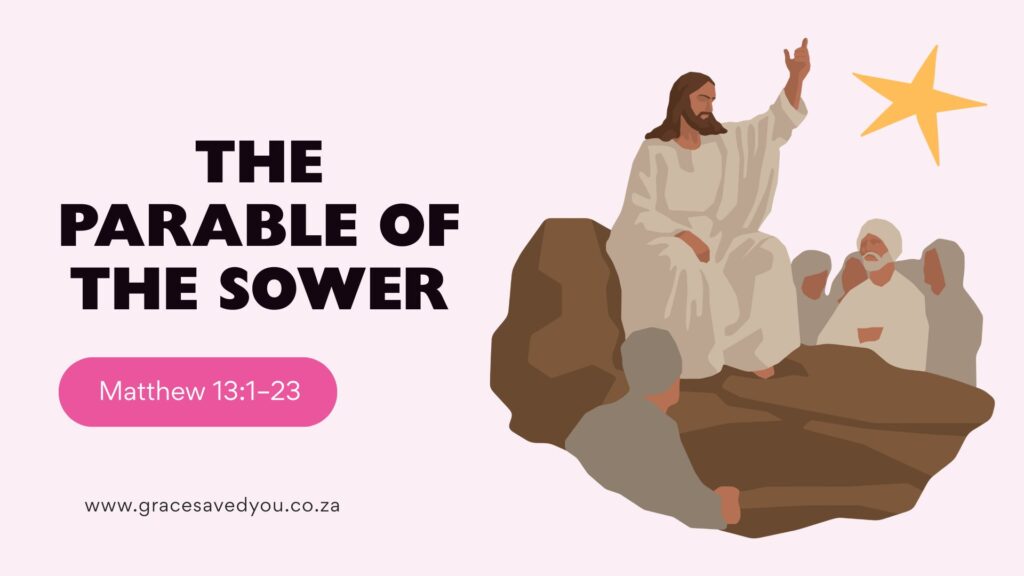
Scripture Focus:
Matthew 13:1–23 (NLT)
Where It Appears in Scripture
This parable is recorded in all three Synoptic Gospels:
- Matthew 13 : 1–23
- Mark 4 : 1–20
- Luke 8 : 4–15
Each Gospel shares the same core message, but each adds small details that help you see the full picture.
1. The Story Itself (What Happened)
Jesus tells a simple farming picture His listeners understood well:
A farmer goes out to plant seed.
The seed falls on four different soils:
- Footpath: Hard, trampled ground , birds quickly eat the seed.
- Rocky soil: A thin layer of soil on top of rock ,seed springs up fast but dies because it has no roots.
- Thorny soil: Seed grows, but thorns grow faster and choke it.
- Good soil: Soft, deep, rich soil produces a harvest far beyond what would normally be expected.
Jesus later explains that the seed represents God’s Word, and the soils represent the condition of people’s hearts.
INTRODUCTION TO THE PARABLE OF THE SOWER
(Matthew 13:1–23 — also in Mark 4:1–20 & Luke 8:4–15)
The Parable of the Sower stands at the very center of Jesus’ teaching ministry. It is the first major parable in the Gospels, and Jesus Himself indicates that understanding this one will help you understand all the others (Mark 4:13).
This parable is foundational because it deals with the most important question in the spiritual life:
How does the human heart respond to the Word of God?
Everything in your walk with Christ, your growth, your fruit, your stability, your endurance flows from this truth.
The Setting: Jesus by the Sea (Why This Matters)
Matthew tells us Jesus was sitting by the Sea of Galilee when crowds gathered (13:1–2).
This wasn’t a random moment:
- The sea acted like an amplifier for His voice.
- Crowds pressed in because His words carried authority and hope.
- He stepped into a boat to create space, symbolizing His role as the Teacher sent from heaven.
This setting pictures a Farmer (Jesus) sowing the Word, with many hearts gathered just like soils spread across a landscape.
The Purpose: Revealing Hearts
The parables are not merely teachings; they are tests of the heart.
Jesus wasn’t only describing soils. He was inviting every listener to identify which soil they were.
This parable reveals:
- the open heart
- the hardened heart
- the shallow heart
- the distracted heart
Every person, in every generation, falls into one of these categories when confronted with God’s Word.
Why Jesus Begins With a Farmer and Seed
Jesus uses a picture everyone understood:
- A farmer
- Seed
- Soil
- Growth
- Harvest
Farmers depended on good soil for survival.
Jesus, the true Sower, depends on the condition of the heart for spiritual fruit to grow.
The simplicity of the imagery hides the depth of the message:
- Seed = God’s Word
- Farmer = Jesus
- Soils = Human hearts
- Birds = The enemy
- Roots = Genuine faith
- Thorns = Worldly distractions
- Harvest = Evidence of a transformed life
This parable is about the Kingdom entering the heart.
Why Jesus Uses Parables Here
Before He explains the parable, Jesus pauses to explain why He teaches this way:
- To reveal truth to the humble (Matthew 13:11)
- To conceal truth from the hard-hearted (13:13–15)
- To fulfill prophecy (13:35)
- To separate curiosity from true discipleship
- To make people examine themselves
Parables are grace to those who desire God, and judgment to those who resist Him.
Why This Parable Is First in the Gospels
Because this parable is about hearing.
If the heart does not receive the Word properly:
- Every other teaching will be misunderstood
- Growth will be stunted
- Fruitfulness will be choked
- Spiritual depth will never come
This is the beginning point for all spiritual life.
Jesus is essentially asking:
“Are you listening with a heart ready to obey?”
The Main Theme
The fruitfulness of the Word in a person’s life depends on the condition of their heart.
Not everyone who hears the gospel responds the same way.
Not every “quick response” is genuine.
Not everyone who grows for a season will endure.
But the good soil the heart God has softened produces a harvest only He can create.
Verse-by-verse explanation
v1-2 Jesus sits in a boat while a huge crowd listens from the shore. This shows the people were hungry for truth, and Jesus was ready to teach them heavenly things in simple way.
v3-4 The farmer (Jesus) scatters seed (God’s Word). Some seed falls on a hard path. Birds quickly eat it. This shows hearts that are hard. They hear the Word but it never sinks in, and the enemy steals it immediately.
v5-6 Some seed falls where there is little soil. It grows fast but dies because it has no roots. These are people who get excited about Jesus at first, but when trouble or pressure comes, they give up because their faith had no depth.
v7 The seed grows, but the thorns grow faster and choke it. These are people who hear God’s Word but allow worry, money, or the desire for pleasure to crowd out Jesus. The result: no spiritual growth.
v8 The seed falls on rich soil and produces a huge harvest. This is the heart that is open, humble, and ready to obey. These people not only hear God’s Word they bear fruit through changed lives.
v9 Jesus is saying: “Don’t just hear this. Pay attention. This teaching decides your eternity.”
v10-11 The disciples ask why He uses stories. Jesus explains that the truth is revealed to those who truly want God, not to those whose hearts are resistant.
v12 Those who lean into God’s truth receive even more understanding. Those who reject truth become more spiritually blind.
v13-15 Jesus says many people “hear” but don’t understand not because God hides truth, but because their hearts have become dull. If they truly turned to Him, He would heal them.
v16-17 Jesus tells His followers they are blessed because they see and hear what prophets in the past longed to see the Messiah Himself teaching them.
v18 – 19 This is the person who hears about the Kingdom but doesn’t understand it, so the devil steals the truth before it takes root.
v20-21 This person is joyful at first, but they fall away when life becomes hard. Their faith never went deep.
v22 This heart hears the Word, but worry, money, or the desire for things strangles their spiritual life.They bear no fruit because Jesus does not hold first place.
v23 The good soil is the heart that:
- listens
- understands
- obeys
And because of that, their life produces fruit, love, obedience, faith, purity, and a life that glorifies Jesus.
The Parable of the Sower shows that the same Word of God is given to everyone but the condition of the heart determines the result.
There are four types of hearts:
1. Shallow Soil
- Hears the Word but rejects it
The enemy snatches the truth immediately
2. Shallow Soil
- Emotional response
- No roots
- Falls away under pressure
3.Thorny Soil
- Hears the Word
- But worry, money, and desires choke spiritual growth
4. Good Soil
- Teachable, humble, obedient heart
- Bears fruit
- Shows real evidence of a transformed life
The parable is not about the seed the seed is perfect. It’s about the soil the heart.
Jesus is inviting us to become good soil.